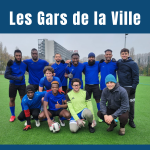

Noyon is a volunteer from Bangladesh who participates in food pick ups and distributions every Tuesday, Friday, Saturday and Sunday without fail. He says he’s not a morning person, yet volunteering early in the morning is a great way to change his routine by doing something good. That’s exactly how we started off our day and began talking about his life in Paris.
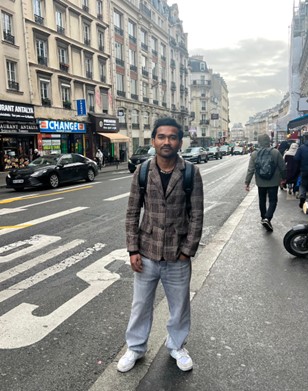
Noyon
“I think I was different when I wasn’t in Serve the City. Now that I do food distribution, I feel a change in myself.”
When asked what motivates him to keep volunteering, the answer was simple: “People’s reaction, especially when they smile. You can’t buy it, it’s priceless.” Noyon points out that volunteering has made him realize how much people take for granted. It has helped him learn how to appreciate the smallest things, and hopes others do the same.
“I’m really grateful that I’m doing this.”
Serve the City Paris has helped Noyon find his sense of community in Paris now that he’s been living here for about a year. By volunteering, he has been able to make great friendships, improve his English and connect with others. He also loves to talk with people from other countries and learn about their different cultures. “You can’t find this on Google or anywhere else!”
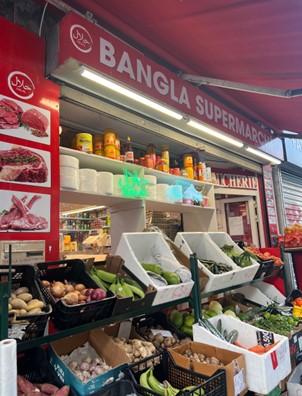
As we walked between Gare de l’Est and Gare du Nord, you could see restaurants, barber shops, grocery stores and more, all with signs in Bangla. Noyon speaks Bengali (Bangla), Hindi, English and understands Urdu. After asking him how he feels speaking in his native language with other Bangladeshi people in Paris, he answered: “It feels really good to speak Bangla. It’s still good that I’m speaking Bangla in a foreign country with my people. I really love my language, my mother tongue.” Noyon shared with me that the 21st of February is International Mother Language day in honor of the Bangladeshi people who fought for the recognition of their language.
“I’m really proud of my culture.”
The first time Noyon and I hung out, he took me to a Bangladeshi restaurant. There was a cricket game on and everyone spoke in Bangla. I ask him in what ways does he stay connected to his culture and he says, by tuning in to the matches. “Cricket is religious in my country even though the Bangladeshi team is bad.” I laughed. “They never win the important tournaments.” Additionally, he enjoys walking around Aubervillier as there’s a big Bangladeshi community.
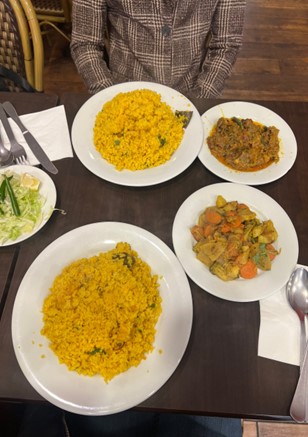
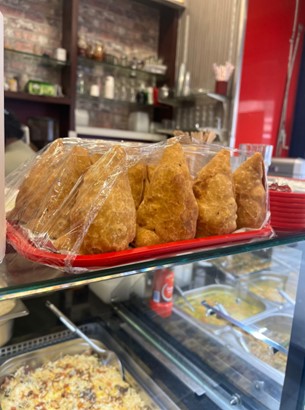
Food is one of the best ways to connect with one’s culture. That’s why after doing food distribution in the morning, we decided to pop into a Bangladeshi restaurant. Here we ate bhuna khichuri, kolija and drank some chai. Last time, we also got to eat a bit of samosa, singara, chanabora and jilapi. Everything was delicious, and as we ate, Noyon shared with me some great facts about Bangladesh. They have the world’s longest natural sea beach (Cox’s Bazar) and the largest contiguous mangrove forest in the world (The Sundarbans Reserve Forest). Impressive!
Bangladesh is also the second-largest exporter of clothes in the world. However, the workers get paid extremely low wages. “It makes me sad… What’s happening in Bangladesh.” Noyon explains that he admires those who work in garment factories as they are always thinking about their children. He believes they are very brave. Noyon often reflects on his country’s reality and the experiences he’s had while living in foreign countries. Inspired to write, he shares this excerpt with us:
Sometimes, when I think about life too much, I write, ‘Life is so complicated to understand.’
Life doesn’t give everyone the same starting cards—only the same heartbeat.
One child grows up planning dreams; another grows up learning how to survive.
Not because one is better, but because the world treated them differently.
Every life is different because chance decides where we begin,
but courage decides how we continue—slowly, painfully, beautifully.
In the end, we are all human:
We hope, we fear, we try.
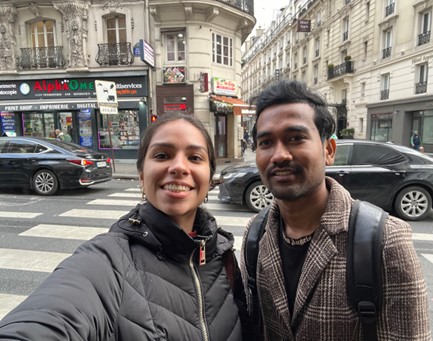
“A Day in the Life of _” is a project by Kasey Polo-Londoño where she interviews beneficiaries who are also volunteers, with the intent to get to know their efforts within the organization, the city and the sense of community they’ve created while connecting to their countries and cultures.